
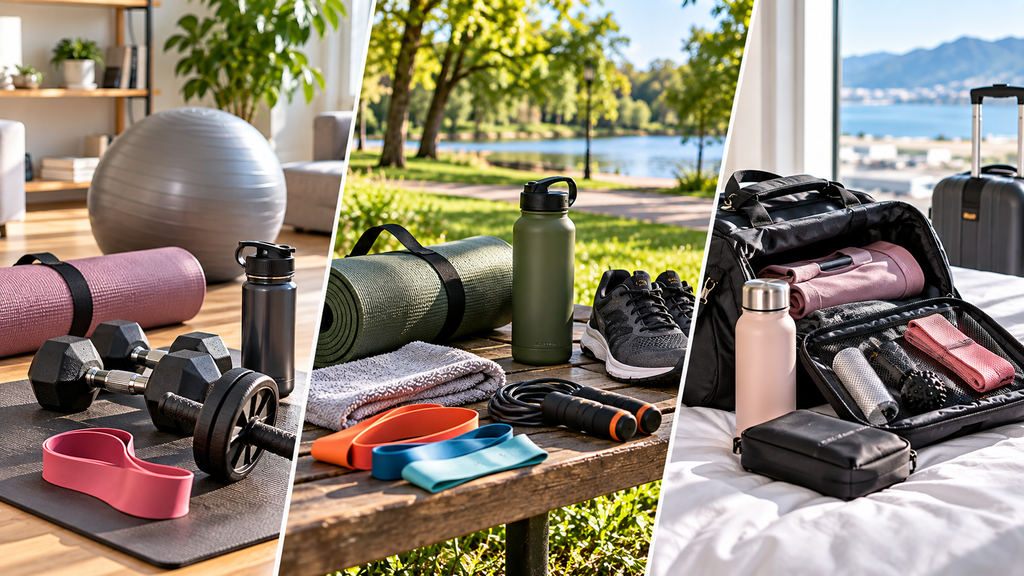
Staying active does not require a fully equipped gym or a strict workout schedule. With the right sports accessories, it is possible to exercise in a living room, enjoy a training session in the park, or maintain a fitness routine while traveling. The key is choosing equipment that matches the available space, preferred activities, fitness level, and everyday lifestyle. Instead of purchasing numerous items that may rarely be used, it is more practical to build a compact collection of versatile accessories that make regular movement easier and more enjoyable.
Different environments create different demands. Home workouts often benefit from comfortable equipment that can be stored easily, outdoor exercise requires durable materials and weather-appropriate features, and travel calls for lightweight accessories that fit into a backpack or suitcase. Understanding these differences helps create a practical selection without unnecessary spending or clutter.
Start With Your Fitness Goals and Daily Routine
Before choosing sports accessories, consider what types of physical activity you want to perform regularly. Someone who enjoys stretching, yoga, and mobility exercises will need different equipment from a person who prefers strength training, running, or high-intensity workouts.
For general fitness, a resistance band, exercise mat, and skipping rope can provide a useful starting point. These accessories support several types of exercise without requiring much storage space. People who prefer walking, jogging, or outdoor circuits may benefit more from comfortable running accessories, a lightweight water bottle, and equipment that is easy to carry.
It is also important to evaluate how much time is realistically available for exercise. If workouts usually last fifteen or twenty minutes, simple accessories that can be used immediately are often more practical than complicated equipment requiring assembly. Convenient equipment reduces the effort involved in getting started and makes it easier to maintain a consistent routine.
Fitness level should influence the decision as well. Beginners generally benefit from versatile accessories that allow gradual progression, while experienced athletes may prefer specialized equipment for specific training goals. Choosing products that are too difficult to use or unnecessarily advanced can make exercise less comfortable and reduce the likelihood of regular use.
Choosing Sports Accessories for Home Workouts
Home training offers flexibility, privacy, and the opportunity to exercise without traveling to a gym. However, available space, flooring, storage, and noise can influence which accessories are suitable.
An exercise mat is one of the most useful starting points. It provides a more comfortable surface for stretching, floor exercises, yoga, and bodyweight workouts. When selecting a mat, consider its thickness, grip, cushioning, and dimensions. A thinner mat may be suitable for balance-focused activities, while additional cushioning can be helpful for exercises performed on hard floors. The surface should remain stable during movement and be easy to clean after use.
Resistance bands are another practical choice. They can be used for upper-body exercises, glute activation, mobility routines, and controlled strength training. Different resistance levels allow users to adjust the difficulty of an exercise without buying bulky equipment. Before purchasing a band, check its material, construction, intended resistance, and suitability for the exercises you plan to perform. Inspect it regularly for cracks, tears, or other signs of wear.
Dumbbells and kettlebells can expand the range of home workouts, particularly when strength development is a priority. Adjustable dumbbells may help save storage space, while fixed-weight options are often simpler to handle. Beginners should choose a manageable weight that allows them to maintain good technique throughout each movement.
For cardio sessions, a skipping rope can be a compact alternative to larger exercise machines. It requires enough clear space overhead and around the body, so it may not be appropriate for every apartment. People living in shared buildings should also consider noise and the effect of repeated impacts on the floor.
Storage should not be overlooked. Small baskets, wall hooks, or a dedicated shelf can keep accessories organized and make them easier to access. Equipment that is visible, clean, and ready to use is more likely to become part of an everyday routine.
Selecting Equipment for Exercise in the Park
Outdoor training provides fresh air, open space, and opportunities to combine exercise with walking or running. Sports accessories for the park should therefore be portable, comfortable to carry, and suitable for the surface and weather conditions.
A skipping rope, resistance bands, and a lightweight exercise mat can support a variety of outdoor workouts. Resistance bands are particularly convenient because they take up little room and can be used for warm-ups, strength exercises, and mobility work. However, bands should only be attached to secure, appropriate anchor points when the product is designed for that purpose. Unstable fences, branches, or public fixtures should not be used as improvised anchors.
Comfortable footwear is essential for walking, jogging, and many outdoor fitness activities. The best choice depends on the surface, distance, activity, and individual fit. Shoes intended for paved paths may have different characteristics from those designed for uneven trails. A secure fit, appropriate support, and sufficient traction are more important than appearance alone.
A reusable water bottle is useful during longer sessions, especially in warm weather. Choose a capacity that suits the expected duration of the workout and a design that is comfortable to carry. A leak-resistant lid helps prevent spills inside a backpack, while an easy-to-clean opening makes regular maintenance simpler.
Weather conditions can also affect equipment selection. Moisture-resistant storage, a small towel, and lightweight layers may be useful when temperatures change throughout the day. Accessories should be dried properly after exposure to rain or sweat to help prevent unpleasant odors and premature material deterioration.
When training in public spaces, respect the environment and other park users. Avoid leaving equipment on busy paths, check the surrounding area before performing exercises, and use only designated facilities for activities that require specialized installations.
Choosing Sports Accessories for Travel
Travel can interrupt regular exercise, particularly when hotel rooms are small or daily schedules are unpredictable. Compact sports accessories help maintain physical activity without adding excessive weight to luggage.
Resistance bands are among the most convenient options for travel. They can support full-body routines, stretching, and warm-up exercises while occupying very little space. A set with several resistance levels offers flexibility for different movements and training intensities. Keeping the bands in a small protective pouch can also help separate them from clothing and other belongings.
A lightweight, foldable exercise mat may be useful for travelers who prefer yoga, Pilates, or floor-based workouts. However, it should be selected according to the available luggage space. For shorter trips, a compact towel or a hotel-provided exercise surface may be sufficient for some activities.
A skipping rope can provide a simple cardio option, provided there is a suitable place to use it. Before relying on one during a trip, consider whether the accommodation has enough space or whether a nearby outdoor area allows skipping safely. Walking shoes may be a more versatile choice for travelers who want to remain active while exploring a destination.
Other useful travel accessories include a refillable water bottle, quick-drying towel, lightweight training clothing, and a small bag for carrying essentials. These items can serve more than one purpose, reducing the number of separate products needed.
Weight and durability should guide purchasing decisions. Very lightweight equipment is convenient, but it should still be sturdy enough for its intended use. Check how accessories fold, whether small parts can be lost, and whether the materials are easy to clean. Before packing, inspect the equipment and make sure it does not have damaged straps, loose fittings, or worn elastic components.
Compare Portability, Durability, and Versatility
When shopping for sports accessories, it helps to compare products using practical criteria rather than focusing on appearance alone. An accessory that performs well in one setting may be less useful in another.
Portability matters most for travel and outdoor workouts. Lightweight equipment that fits into a small bag is easier to take along, but size should not be the only consideration. A compact product that is uncomfortable or difficult to use may offer little long-term value.
Durability becomes especially important for accessories exposed to outdoor conditions or frequent use. Examine stitching, seams, handles, connectors, and surface materials. For elastic products, look for signs of uneven construction or damage before the first workout. Product instructions can provide information about appropriate use, cleaning, storage, and replacement.
Versatility can help reduce the number of items required. Resistance bands, for example, can support strength training, mobility work, and warm-ups. A mat may be suitable for stretching, balance exercises, and floor workouts. Selecting equipment with several useful applications can make a small collection more effective than a large assortment of specialized accessories.
| Accessory | Home | Park | Travel |
|---|---|---|---|
| Exercise mat | Excellent for floor workouts | Useful when portable | Best in a lightweight or foldable design |
| Resistance bands | Versatile for strength and mobility | Easy to carry outdoors | Excellent for compact routines |
| Skipping rope | Suitable when space allows | Useful for cardio | Compact, but requires a suitable location |
| Dumbbells or kettlebells | Useful for dedicated strength training | Less convenient to transport | Usually impractical for lightweight packing |
| Water bottle | Useful for every workout | Essential for longer outdoor sessions | Convenient for daily activity and exercise |
| Training towel | Useful for hygiene and comfort | Helpful during warm weather | Compact and easy to pack |
The most suitable combination depends on how often each environment is used. Someone who primarily exercises at home may prioritize a mat and strength equipment, while a frequent traveler may get more value from resistance bands and a compact towel.
Pay Attention to Comfort, Fit, and Safety
Sports accessories should support movement rather than make it more difficult. Comfort and fit can determine whether equipment remains useful over time, so products should be assessed before being incorporated into regular training.
Mats should provide adequate grip for the intended activity. Bands should have resistance appropriate to the user’s ability, and handles or straps should feel secure during movement. Footwear should fit properly without causing pressure points or excessive slipping. Adjustable accessories should be easy to secure and should not shift unexpectedly during use.
Safety also depends on the condition of the equipment. Inspect elastic bands before each session, check that fasteners remain secure, and replace products that show significant wear. Follow manufacturer instructions for weight limits, attachment methods, and intended exercises. Avoid improvising with accessories that were not designed to support body weight or withstand sudden force.
The surrounding environment matters just as much. Clear enough space for movement at home, check outdoor surfaces for uneven ground or debris, and avoid exercises that require more room than is available. During travel, adapt workouts to the accommodation instead of attempting movements in cramped or unstable spaces.
New exercises should be introduced gradually. A simple warm-up, controlled movement, and appropriate recovery can make training more comfortable. If an exercise causes sharp pain, stop rather than attempting to push through it.
Care for Sports Accessories to Extend Their Lifespan
Regular maintenance helps preserve the condition of sports equipment and makes it more pleasant to use. Sweat, dust, moisture, and repeated friction can affect materials over time, particularly when accessories are carried between different environments.
After each workout, wipe down equipment according to the manufacturer’s cleaning instructions. Allow damp accessories to dry completely before storing them in a bag, drawer, or closed container. This is particularly important for mats, fabric straps, and resistance bands.
Store elastic products away from excessive heat, direct sunlight, sharp edges, and chemicals that could damage their material. Keep weights in a stable location where they cannot roll or fall. Clean water bottles regularly and check their lids for leaks or signs of wear.
Before a trip, inspect each item and pack accessories in a way that prevents sharp or heavy objects from damaging softer equipment. After outdoor exercise, remove dirt and moisture before placing everything back into storage.
Replacing worn equipment is also part of responsible maintenance. A damaged resistance band or unstable attachment can create unnecessary risks. If an accessory no longer performs as intended, replacing it is usually more sensible than continuing to use it.
Build a Practical Sports Accessory Kit
A useful sports kit does not need to include every available product. The best selection is one that supports the activities you enjoy and fits naturally into your daily routine.
For a simple home setup, start with an exercise mat, resistance bands, and a water bottle. Add dumbbells or other strength accessories if you want to expand your workouts and have sufficient storage space.
For outdoor exercise, prioritize comfortable footwear, a water bottle, a towel, and one or two compact accessories suited to your preferred activities. For travel, focus on lightweight equipment that can be used in several ways, such as resistance bands, a skipping rope, and a quick-drying towel.
Before buying anything, ask three questions: Will I use this regularly? Can I transport and store it comfortably? Does it add something useful to my current routine? If an accessory does not meet a clear need, it may be better to postpone the purchase.
Conclusion: Choose Accessories That Fit Your Lifestyle
Choosing sports accessories for home, the park, and travel becomes easier when the decision starts with real training habits rather than the number of products available. Home workouts benefit from comfortable, space-efficient equipment; outdoor sessions require portable items suited to changing conditions; and travel calls for lightweight accessories that are easy to pack and use in different settings.
Prioritize comfort, durability, versatility, and safety. Start with a small selection, learn how each item fits into your routine, and expand the collection only when a specific need appears. With thoughtful choices and regular maintenance, a few well-selected accessories can support an active lifestyle across different environments without unnecessary expense or complicated preparation.
Add a quick starter-kit checklistMake the comparison table more actionable